
Right from the early days of liberalisation, there have been political controversies surrounding several cases that landed on the FIPB table and which, in turn, have often led to court battles.

The $100 billion Tata group conglomerate is a major beneficiary of the decision to open up aviation in India.
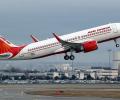
The government has notified the agreement between Air India and special purpose vehicle AIAHL for the transfer of non-core assets, ahead of the national airline's takeover by the Tata Group. The government had in October last year, inked the share purchase agreement with the Tata Group for the sale of national carrier Air India for Rs 18,000 crore. The Tata Group is expected to take full control of the airline, it founded in 1932, on Thursday. The cash component of the deal would come once the handover process is completed. The Tata Group would pay Rs 2,700 crore cash and take over Rs 15,300 crore of the airline's debt.
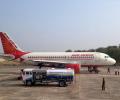
When the Tatas re-boarded Air India on January 27 last year, the price of aviation turbine fuel was at over Rs 80,000 per kilolitre. Rupee was trading at around Rs 74 to a US dollar. The Omicron variant of Covid-19 was in prevalence - barely a week earlier, India had reported over 340,000 cases on a single day. Seven-day home quarantine of international travellers was the norm.

The group, comprising on 147 women and 20 men, were airlifted by an Air Asia chartered flight from Kochi to the Biju Patnaik International Airport in Bhubaneswar.
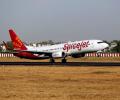
SpiceJet has decreased its domestic services by 31 per cent to 2,995 weekly flights in the upcoming winter schedule as compared to 4,316 weekly flights that it got approved for the winter schedule of 2019, the aviation regulator DGCA said on Thursday. Meanwhile, Vistara, another private carrier, has increased its domestic services by 22 per cent to 1,675 weekly flights as compared to 1,376 weekly flights for 2019 winter schedule, the regulator added. The winter schedule begins on October 31 of a year and ends on March 26 next year.

Approval was held up due to CBI investigation into international flying permit of Tata group-owned AirAsia India.
The Delhi high court on Thursday dismissed BJP leader Subramanian Swamy's plea seeking to set aside the Air India divestment process on the allegation that the methodology adopted by the government in the valuation of the national carrier was "arbitrary, illegal and against public interest". The order was passed by a bench of Chief Justice D N Patel and Justice Jyoti Singh. The court said a detailed order will be uploaded. "Dr. Subramanian Swamy, sir we are dismissing this matter...," the bench said.

However, any progress on the deal depends upon Goyal giving up control of the company.

"Financial bids for Air India disinvestment received by Transaction Adviser. Process now moves to concluding stage," DIPAM Secretary Tuhin Kanta Pandey tweeted.
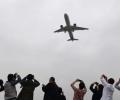
Despite partial restoration of salaries, pilots across airlines remain dissatisfied, throwing challenges for managers.
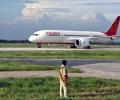
The man was reissued the ticket and allowed to board the flight once the airline staff at the Jaipur airport realised that he is not the comedian who is on the no-fly list of four airlines, including Air India.

The country's fourth budget carrier has also announced the addition of Kochi to its existing network from July 20.
The government on Monday signed the share purchase agreement with Tata Sons for the sale of national carrier Air India for Rs 18,000 crore. Earlier this month, the government had accepted an offer by Talace Pvt Ltd, a unit of the holding company of the salt-to-software conglomerate, to pay Rs 2,700 crore cash and take over Rs 15,300 crore of the airline's debt. Following that, on October 11 a Letter of Intenet (LoI) was issued to the Tata Group confirming the government's willingness to sell its 100 per cent stake in the airline.
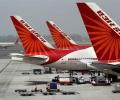
The government on Monday issued a letter of intent (LoI) confirming the sale of its 100 per cent stake in loss-making Air India to Tata Group for Rs 18,000 crore, a senior official said. Last week, the government had accepted an offer by Talace Pvt Ltd, a unit of the holding company of salt-to-software conglomerate, to pay Rs 2,700 crore in cash and takeover Rs 15,300 crore of the airline's debt. Subsequent to that, an LoI has now been issued to Tata confirming the government's willingness to sell its 100 per cent stake in the airline.

To attract bidders, the government had decided to hive of around Rs 35,000 crore of the company's debt into a separate subsidiary, leaving around Rs 23,286 crore to be absorbed by the new bidder.


National carrier Air India became part of the 27-member global airlines grouping Star Alliance, as budget airline AirAsia India launched operations and Tata-SIA joint venture carrier Vistara received the flying permit and announced its intentions to start operations from January 9.
Experts said the risks associated with the Indian Experts say that aviation sector would keep investors away from airline stocks.
The Tatas are rather overwhelmed with some facets of the airline they have discovered, but even more unnerved by what they may not have yet uncovered, reveals Anjuli Bhargava.
Domestic air traffic logged 14.35 per cent growth in November as compared to the corresponding period last year propelled by the festive season rush.
Jet Airways, IndiGo and GoAir achieved operating profits of Rs 122.6 crore (Rs 1.22 billion), Rs 795.8 crore (Rs 7.95 billion) and Rs 85.1 crore (Rs 851 million) respectively during the same period, Minister of State for Civil Aviation K C Venugopal said in reply to a question.

The senior Tata Group executive's appointment as NSDC chairman raises the vital question of conflict of interest

Two aborted missions, three different ministers, multiple rule changes and two decades later, Indian taxpayers will no longer have to pay Rs 20 crore per day to keep the loss-making Air India flying. While opposition Congress expectedly attacked the decision as selling the family silver, DIPAM secretary Tuhin Kanta Pandey said what Tata is getting is not a cash cow but an airline which is bleeding where money needs to be pumped in to refurbish obsolete aircraft and dust up strangled ones while being unable to touch any employee for one year and only be able to resize staff after paying a VRS. "It won't be a very easy task there. Only advantage is they (new Air India owner) are paying the price which they think they can manage. "They are not taking the excessive debt accumulated to fund years of losses. We are continuing it as an ongoing concern.... This process has also saved huge amount of taxpayers money going forward," Pandey told PTI.

Rivals say the concessions would benefit AirAsia alone.

Though the Mumbai and Delhi airports still rule the domestic aviation market, the share of the two in overall traffic is falling. In 2006-07, the two airports collectively handled 40.6 per cent of all domestic passengers; in 2012-13, their share fell to 37 per cent.

Born to a Goan father, with a childhood partially spent in Kolkata -- where he attended La Martiniere school, also Kingfisher chief Vijay Mallya's alma mater -- the Malaysia began his career with another aviation legend, Richard Branson, albeit in a very different business.

An unprecedented decision to form a ministerial-level committee was driven by fears of witch-hunt by investigating agencies.

The civil aviation ministry received 20 applications and it granted NOCs to sixteen companies between 2009 till now
This is the largest single dose of equity infusion into the joint venture since its launch in January 2015.

Air Asia's difference approach has been developing a portfolio first. We were the first airline to fly to Trichy and then after going to newer and uncharted markets.

Vistara, an airline in which Tata Sons owns 51 per cent stake, is one of those which wants a relaxation in rules, saying these are important for the country's economic growth.

Following the entry of Tata-SIA and AirAsia into the Indian aviation market, the domestic aviation industry is seeing increased interest from private entities.
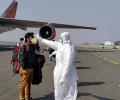
Within two weeks of many airlines deciding to roll back salary cuts encouraged by a steady increase in traffic flow, a second wave of coronavirus along with rules of compulsory RT-PCR test has hit forward bookings. The fears of last summer, when the pandemic had overturned all the wisdom of airline boardrooms, have returned to haunt the aviation industry. According to an official in the Ministry of Civil Aviation, flight occupancy is down to 60 per cent from 70 per cent in the first week of March. Airline lobby group IATA estimates that low cost airlines need to fly at 80 per cent occupancy to be profitable.

Singapore Airlines first approached the Tatas, its old choice for a venture in India, and was aware of AirAsia negotiations.

The airline is not convinced that it will have a sizeable passenger traffic to make wide body operations profitable
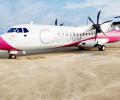
The fare for the inaugural flight is Rs 1 and the tariff for the first three months is Rs 999.
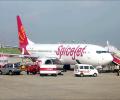
The prospective owners of Indian low-cost carrier SpiceJet Ltd plan to cut the airline's fleet, shrink its network and return to a "plain vanilla" business model to achieve profitability, two people close to the investors said.
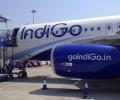
Based on the Skytrax ranking for 2018, IndiGo is number two among the best low-cost carriers in Asia, behind rival AirAsia.
"Tata Sons board is meeting tomorrow (Friday) to consider the proposal to bid for Jet Airways," people in the know of the development told PTI.
 © 2026 Rediff.com - Advertise with us - Disclaimer - Privacy Policy - Sitemap - Feedback - About us - Terms of use - Grievances